Beekeeping is much more than collecting honey. It is work that takes knowledge, patience, care and an understanding of how bees live. Just as a doctor has their equipment and a gardener their tools, a beekeeper uses special things that help them work safely and look after the bee colony.
In our workbook, The Hive of Knowledge, we introduce children to the basic beekeeping equipment. Now let’s find out what each of those things is actually for!
1. The beekeeping suit: protection from stings
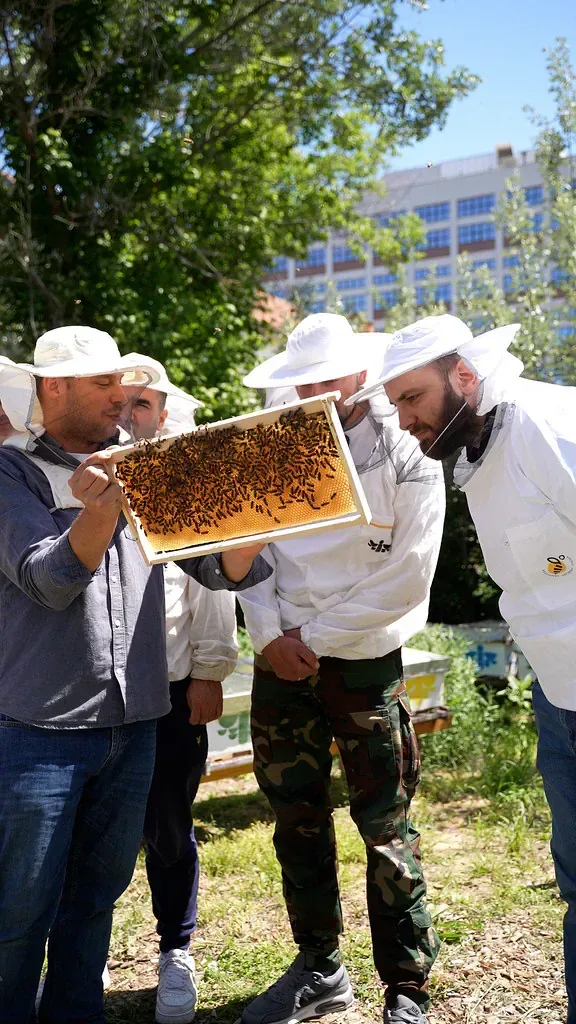
The first thing you will notice about a beekeeper is their protective suit. It is usually white or another light colour, with long sleeves and long legs, and gloves are often worn with it.
The beekeeping suit makes stings less likely and lets the beekeeper work with the bees more carefully and safely.
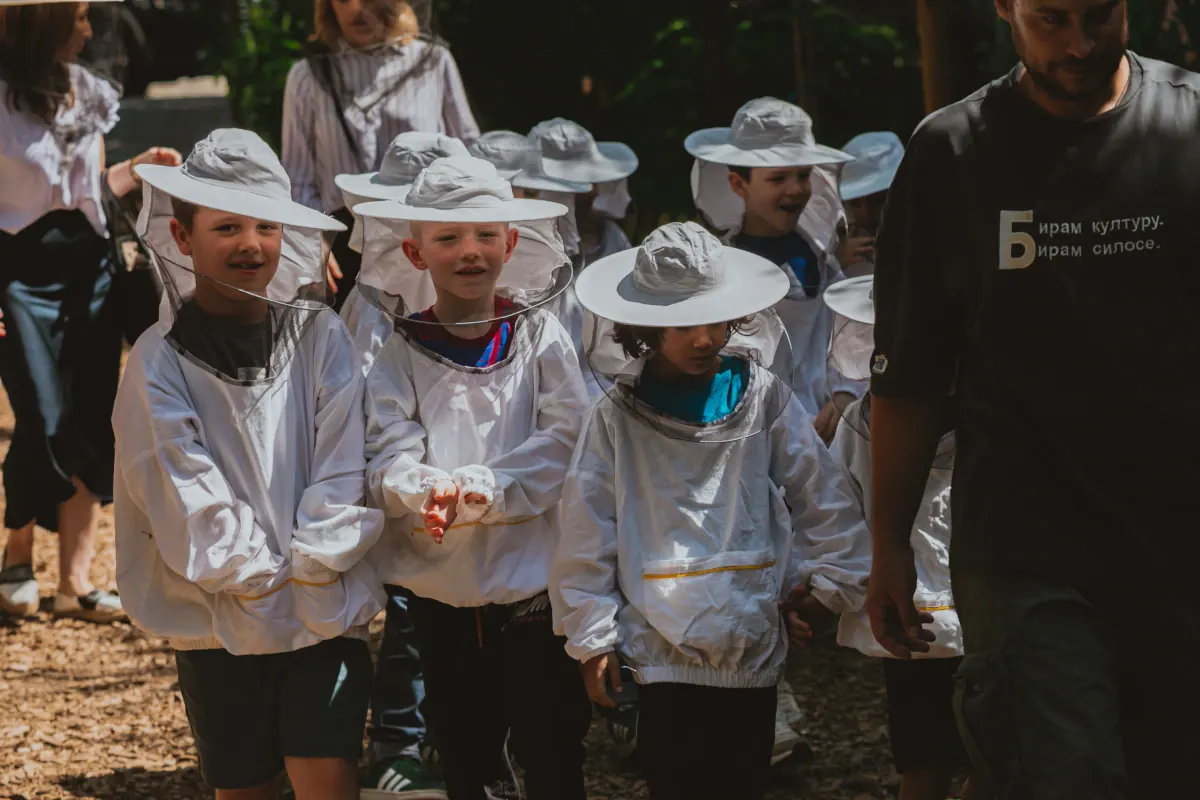
Fun fact: Why is the suit usually white? Light colours are practical because they heat up less in the sun, and bees usually react more calmly to light, smooth clothing than to dark, rough clothing.
2. The beekeeping hat: a net that protects the face
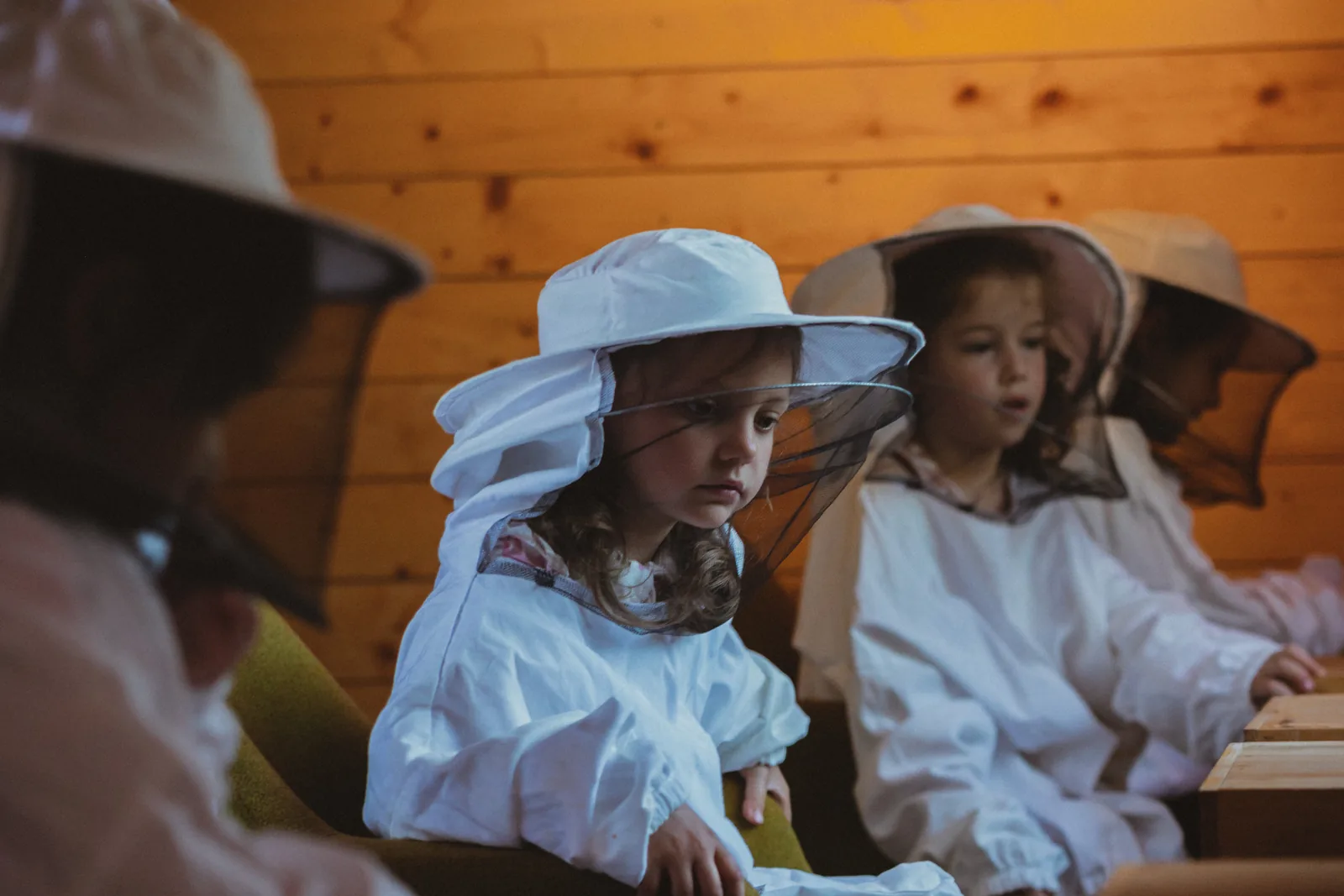
The beekeeping hat has a special addition: a protective net, or veil, that covers the face and neck.
The net lets the beekeeper see clearly what they are doing, while making it less likely that a bee will sting them in the face.
When a beekeeper opens a hive, hundreds of bees may be flying around them. That is why protecting the face is one of the most important parts of their equipment.
3. The smoker: why does a beekeeper use smoke?
This unusual metal object is one of the most recognisable beekeeping tools.
The smoker produces smoke that helps the beekeeper inspect the hive more calmly. But how does it work?
Bees also communicate with each other through scent signals called pheromones. When they sense danger, they can release an alarm pheromone that warns the other bees.
Smoke makes it harder for the bees to pick up those signals, so the beekeeper can carry out the inspection more easily.
Fun fact: Smoke does not put bees to sleep! Above all, it disrupts the way they communicate by scent. That is why experienced beekeepers use small amounts of cool smoke, and only when it is needed.
4. Tinder fungus: a fungus that helps the beekeeper
Believe it or not, one of the useful materials in beekeeping comes from the forest!
Tinder fungus (Fomes fomentarius) is a kind of fungus that grows on tree trunks, often on beech and birch. It has a hard, rounded body that can look like a hoof.
Once it has been properly prepared and dried, this fungus can be used as fuel in a beekeeper’s smoker. Tinder fungus smoulders slowly and gives off the smoke the beekeeper uses while working.
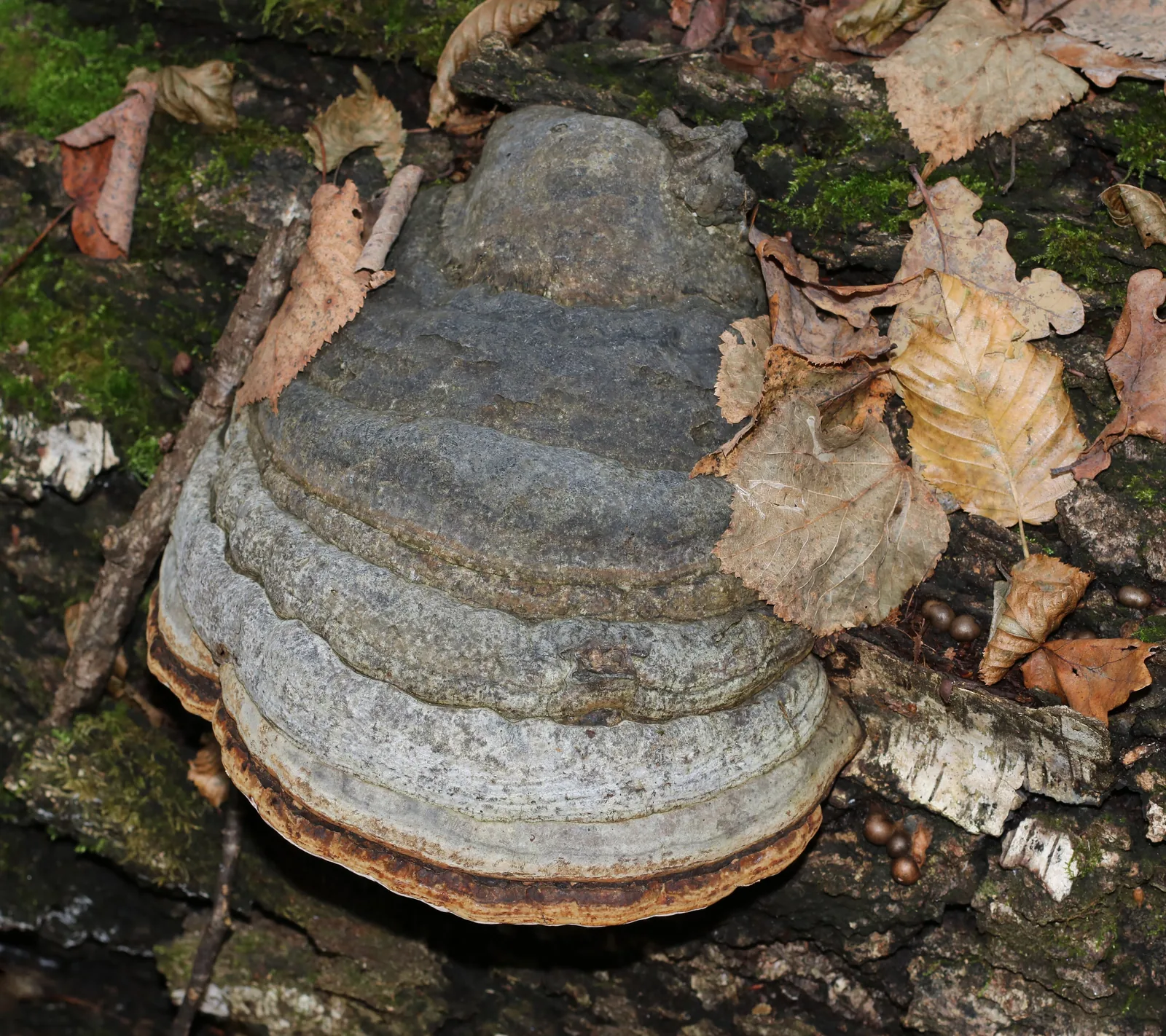
Fun fact: People used tinder fungus to light fires long before modern matches and lighters were invented. That is how a natural material found its place in beekeeping too.
5. The bee brush: moving bees gently
A bee brush looks much like an ordinary brush, but it has soft, gentle bristles.
The beekeeper uses it to carefully move bees off a frame, for example during a hive inspection or when getting ready to collect honey.
The brush is used slowly, so that the bees are not disturbed or hurt for no reason.
It is not only the beekeeper who needs protecting from the bees: it also matters that the bees are protected while the beekeeper works.
6. The beekeeping knife and hive tool: help with opening the hive
Did you know that bees repair and seal small gaps in their hive themselves?
They do it with propolis, a resin-like substance they make by processing plant resins. Propolis is very sticky, so bees can use it to join parts of the hive together.
That is why the beekeeper uses a special metal tool, most often a hive tool, to carefully separate the stuck parts, lift the frames and remove extra wax and propolis.
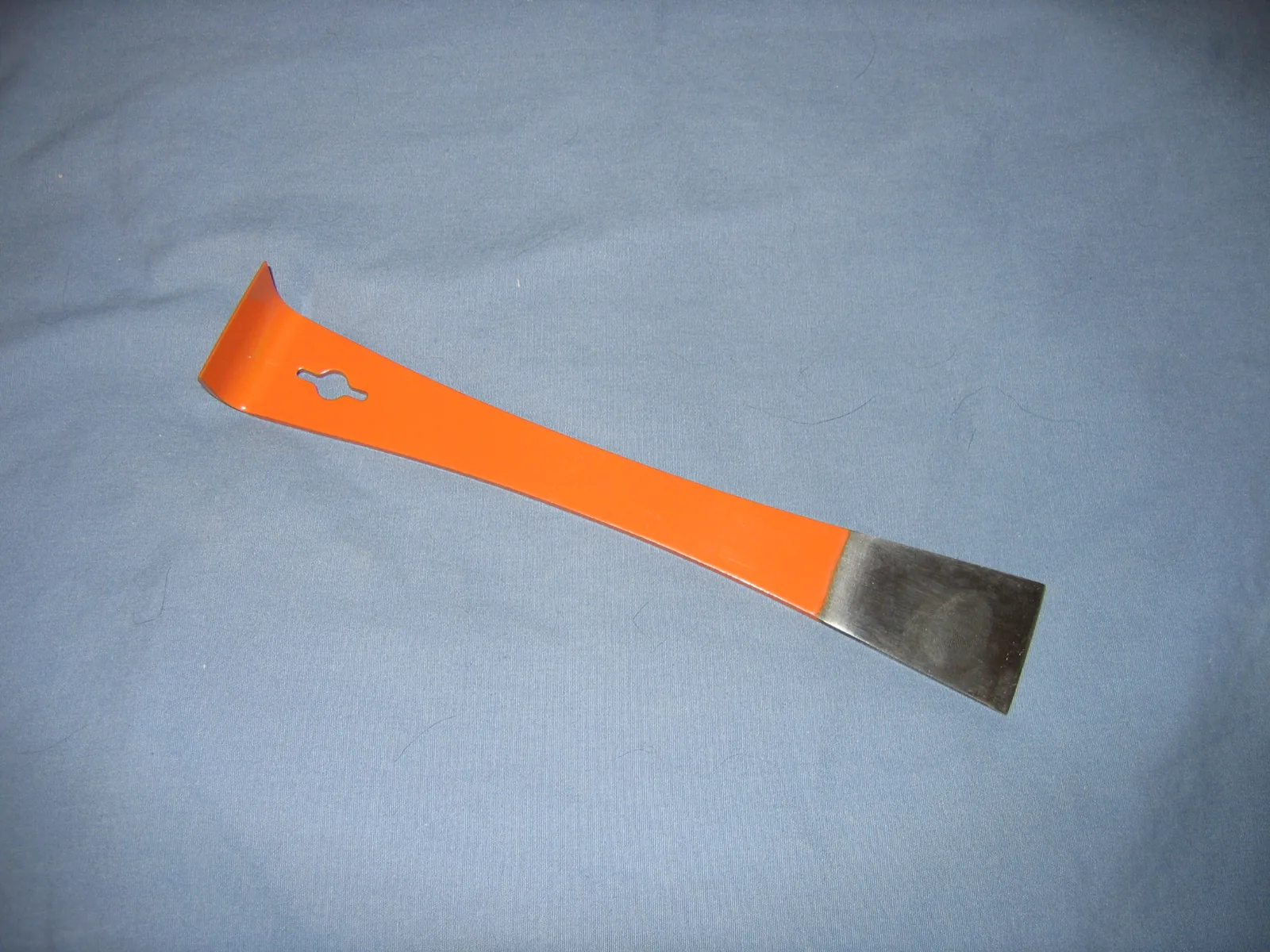
There are also special beekeeping knives, used when working the honeycomb and preparing to extract the honey.
7. The frame with honeycomb: a small building made by bees
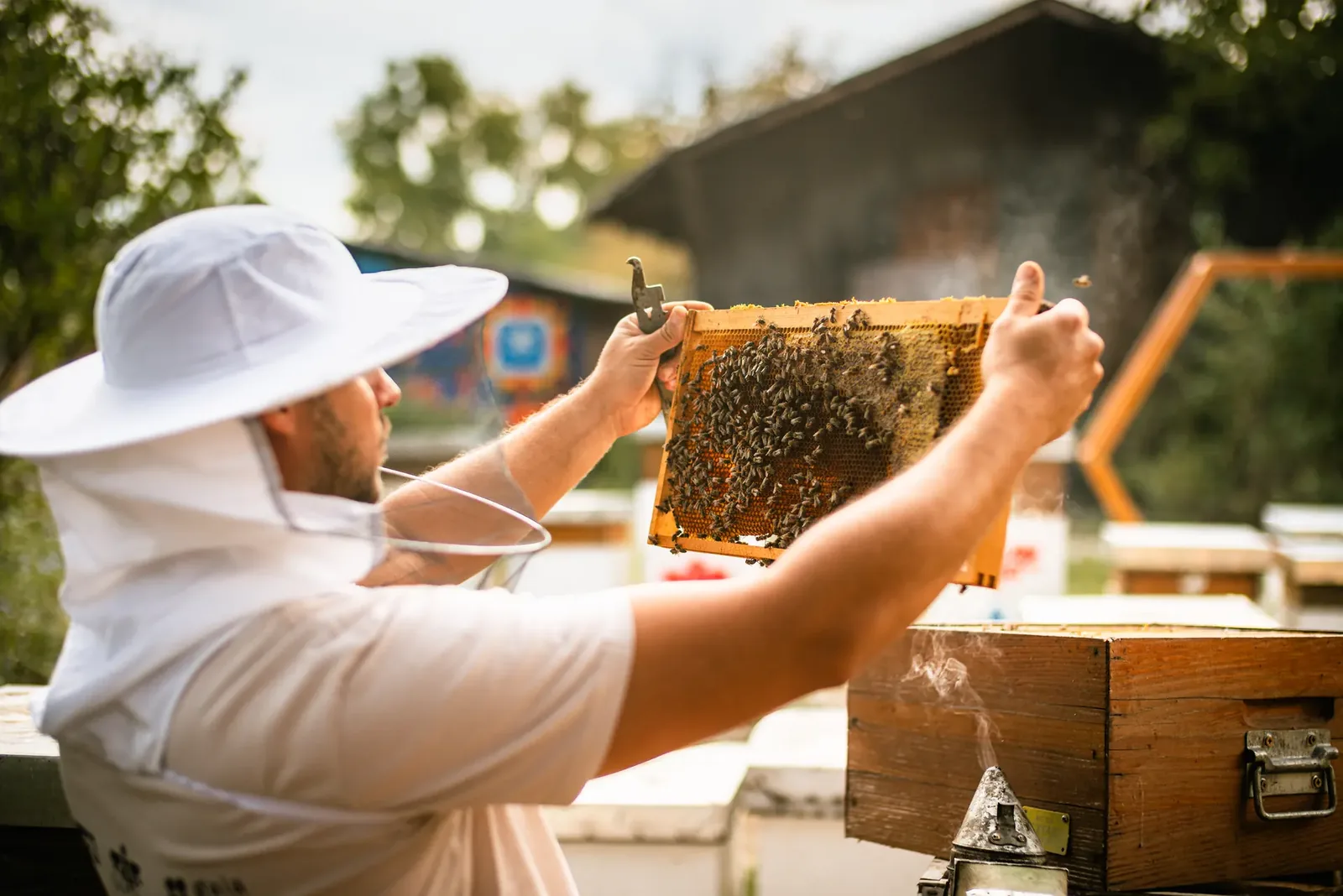
A frame is a wooden surround that the beekeeper places in the hive. Inside it, the bees build honeycomb out of beeswax.
Honeycomb is made up of a great many cells, which are usually hexagonal.
But honeycomb is not just where bees keep their honey! They can also store pollen in it, and the queen lays eggs in special cells, from which new bees develop.
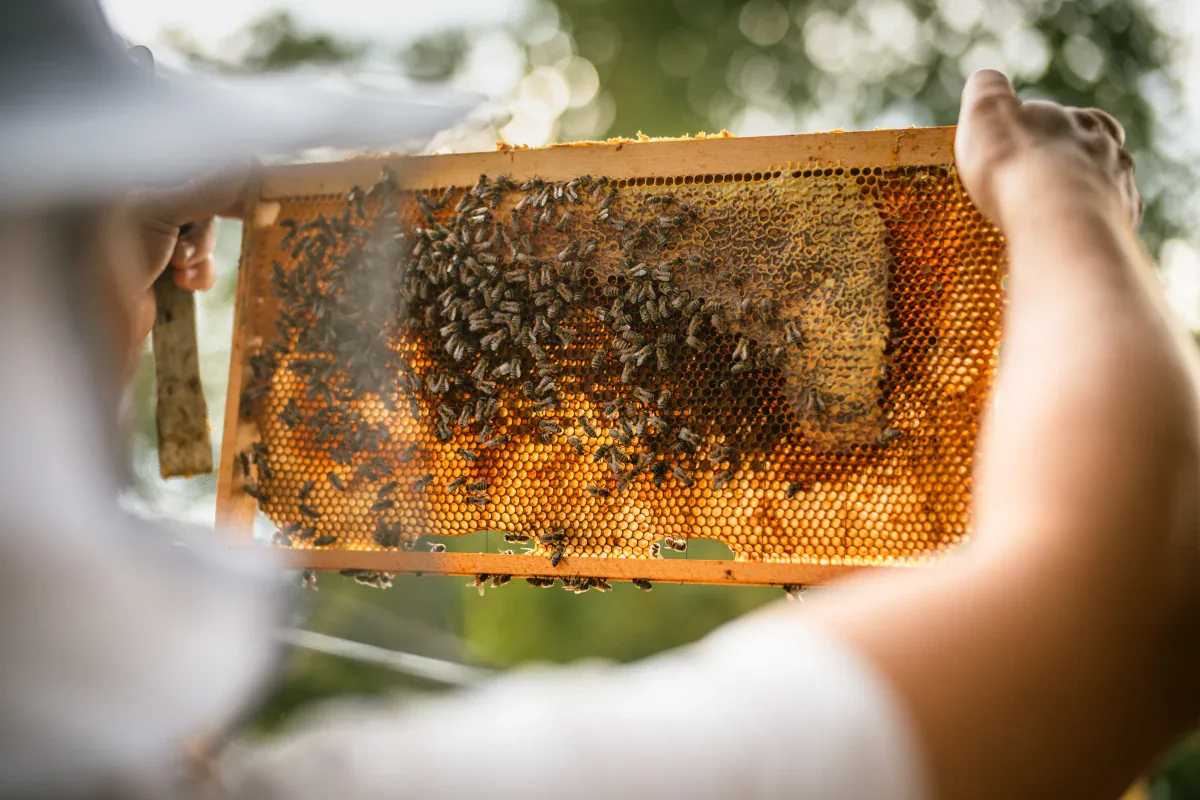
Fun fact: The hexagonal shape of the cells lets bees use space and wax very efficiently. That is why honeycomb is one of the best-known examples of amazing building in nature.
8. The uncapper: uncovering the honey
When bees get honey ready for long-term storage, they seal the cells of the comb with thin wax caps.
Before the honey can be spun out of the frame, the beekeeper has to remove those caps. For this they use a special tool: an uncapper, often in the form of a fork with thin metal tines.
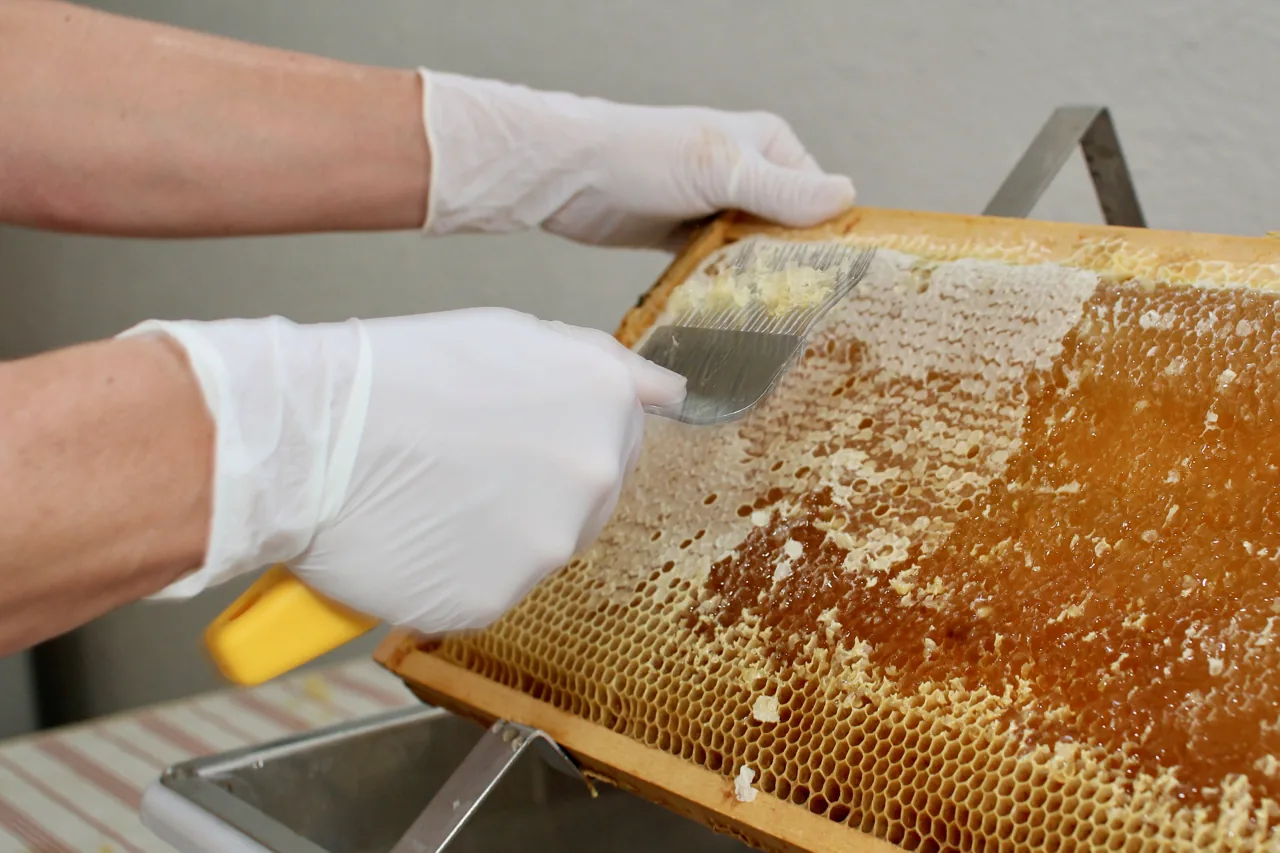
Once uncapped, the frames usually go into an extractor, which spins the honey out of the comb.
And then comes one of the loveliest moments in beekeeping: collecting the honey!
9. The honey bucket: where does the collected honey go?
Once the honey has been extracted, it needs to be collected and stored properly.
For this, beekeepers use clean containers made for contact with food. These can be special plastic containers or stainless steel ones, with a lid that keeps dirt and moisture away from the honey.
Before it is packed, the honey is usually strained to remove larger bits of wax and other particles.
Only then does the honey go into the jars we find on our table.
Beekeeping teaches us to care for nature
Now we know that every item a beekeeper carries has its own important role. Some protect them, others help them work carefully with the bees, and others again make it possible to collect and store the honey.
Yet the most important tool of every good beekeeper is neither the smoker nor the brush. It is their knowledge of bees.
That is exactly what we want to bring closer to children through our educational workbook, The Hive of Knowledge, in which they discover the world of bees, honey plants and nature through play, illustrations and fun tasks.
And if you would like to see all this in real life, visit us at BeeCenter, in the Honey Garden at the Silosi in Belgrade, where children can get to know the beekeeping equipment and discover what life in a bee colony looks like.
Finally, a question for young explorers: If you could be a beekeeper for one day, which piece of equipment would you want to try first?